Building a paragraph
A topic sentence, supporting details and a closing sentence, and how to put them together into one clear paragraph
About four lessons of 40 to 50 minutes
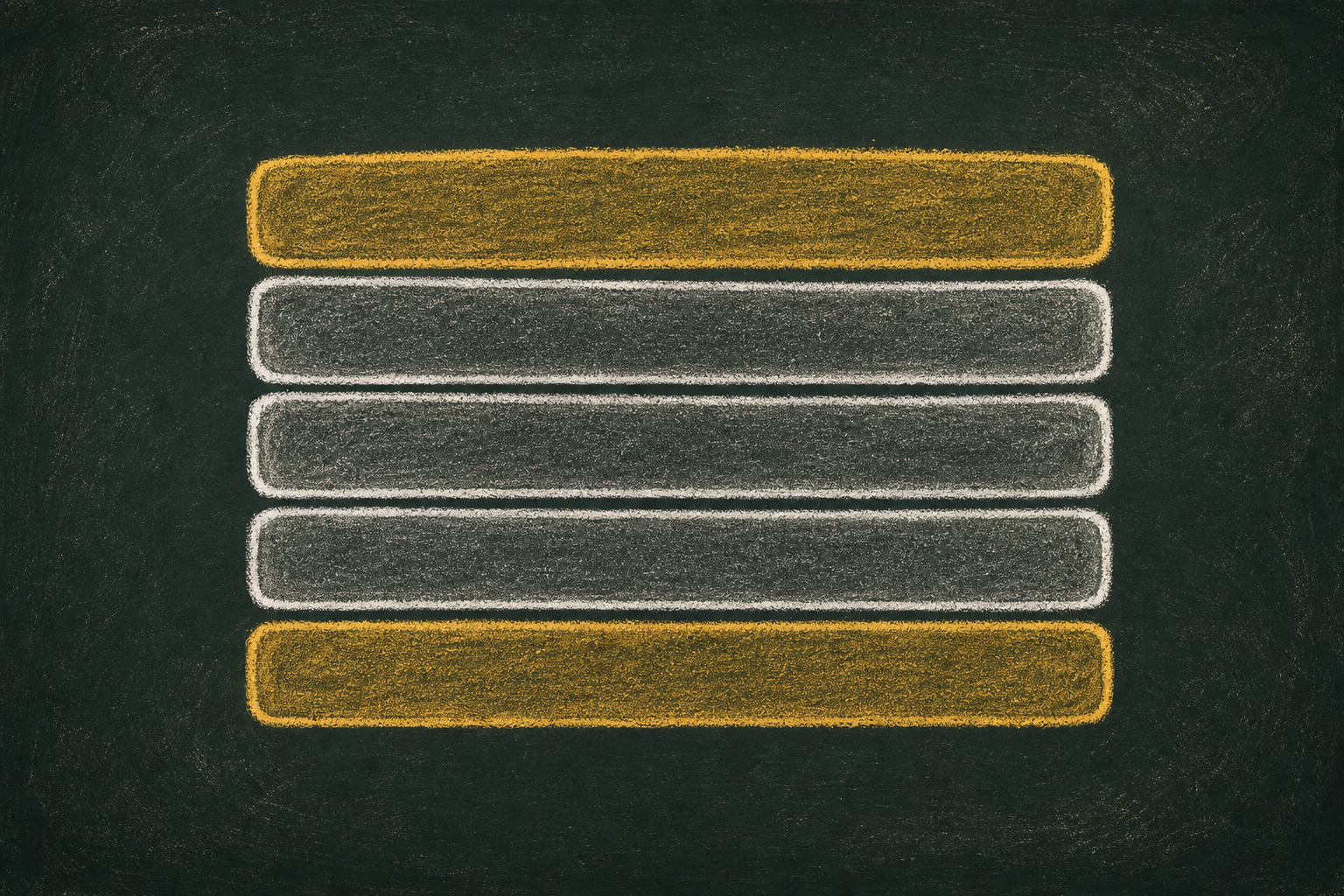
A paragraph is a sandwich
Think of a good paragraph as a sandwich. The top bun is the topic sentence: it tells the reader, in one sentence, what the whole paragraph is about. The filling is the supporting detail sentences: the tasty middle that gives facts, reasons and examples. The bottom bun is the closing sentence: it holds everything together and finishes the paragraph off.
Top bun, filling, bottom bun. Miss the top bun and the reader does not know what your paragraph is about. Miss the filling and there is nothing to say. Today you will learn to build all three parts and put them together into one clear, tasty paragraph.
- Top bun: the topic sentenceone sentence that says what the whole paragraph is about
- Filling: the supporting detailssentences that give facts, reasons and examples
- Bottom bun: the closing sentencewraps the paragraph up and reminds the reader of the big idea
- Put them together: one paragraphtop bun, filling, bottom bun, in that order
What students will be able to do
Students will understand that a paragraph is a group of sentences about one main idea, will write a clear topic sentence, will add supporting detail sentences that all connect to it, will finish with a closing sentence, and will put the parts in order and edit the paragraph for capitals, full stops and any sentence that does not belong.
- I can explain that a paragraph is a group of sentences about one main idea.
- I can write a topic sentence that tells the reader what my paragraph is about.
- I can write supporting detail sentences that all connect to my topic sentence.
- I can write a closing sentence that wraps the paragraph up.
- I can put the parts in order and edit my paragraph for capitals, full stops and any sentence that does not belong.
Standards this unit teaches
- W.3.2Common Core (US)Write informative texts with a clear structure
Write informative/explanatory texts to examine a topic and convey ideas and information clearly, introducing a topic, grouping related information together, developing the topic with facts and details, and providing a concluding statement or section.
- W.3.1Common Core (US)Write opinion pieces that support a point of view
Write opinion pieces on topics or texts, supporting a point of view with reasons: introduce the topic, state an opinion, supply reasons that support the opinion, and provide a concluding statement or section.
- L.3.2Common Core (US)Capitalization and punctuation when editing
Demonstrate command of the conventions of standard English capitalization, punctuation, and spelling when writing.
- AC9E3LY06Australian Curriculum v9 (ACARA)Create and edit written texts with clear structure
Plan, create and edit written texts for a purpose and audience, organising ideas into paragraphs and using text structures and language features to develop and connect ideas.
Printable anchor chart
Print a wall poster to go with this unit, a code-drawn diagram students can point to during and after the lesson.
Prior knowledge
This unit builds on skills students should already have met. Revisit any that are shaky first.
- Nouns, verbs and building a sentencestudents must be able to write a complete sentence before they can build a paragraph of them
- Verb tenseskeeping a steady tense across the sentences keeps a paragraph clear
- Synonymschoosing a stronger word makes a detail sentence more vivid
- Building reading fluencyreading paragraphs smoothly helps students hear how a well-built one flows
Words to teach and display
- Paragraph
- a group of sentences that are all about one main idea
- Topic sentence
- the sentence, usually first, that tells the reader what the whole paragraph is about
- Supporting detail
- a sentence that gives a fact, reason or example about the topic sentence
- Closing sentence
- the last sentence, which wraps the paragraph up without adding a new point
- Main idea
- the one big point a paragraph is about; the topic sentence states it
- Editing
- reading your writing back to fix mistakes and cut anything that does not belong
Teach it: model, guided practice, independent
The lesson moves from what a paragraph is, to writing each part, to building and editing a whole paragraph. Every example is a real paragraph students read, plan and write, so the structure is practised in writing rather than only named. Build a class paragraph together on the board before students write their own.
1. What a paragraph is
Open with the sandwich. A good paragraph has three parts: a top bun (the topic sentence), a filling (the supporting details) and a bottom bun (the closing sentence). Underneath the picture is the real rule: a paragraph is a group of sentences that are all about one main idea.
Show that every sentence pulls in the same direction. If a sentence is about a different idea, it does not belong in this paragraph. One paragraph, one main idea.
Point out how a paragraph looks on the page: it starts on a new line, often indented, so the reader can see where one idea ends and the next begins.
- What are the three parts of the sandwich paragraph?
- What is the real rule about what a paragraph is?
- How does a reader see where a new paragraph starts?
2. The topic sentence
The top bun is the topic sentence. It tells the reader, in one sentence, what the whole paragraph is about. A good topic sentence is not too narrow (about only one small thing) and not too wide (about far more than the paragraph covers). It is a clear signpost for what is coming.
Model the test out loud: a topic sentence should name the topic and hint that more is coming, like 'Dogs make good pets for many reasons.' The word 'reasons' promises the details.
Contrast it with a sentence that is too narrow ('My dog is called Rex') or too wide ('Animals are interesting'). Neither one signposts this paragraph.
Which is the best topic sentence for a paragraph about why dogs make good pets? (a) 'My dog is called Rex.' (b) 'Dogs make good pets for many reasons.' (c) 'Animals are interesting.'
- Check (a): it is too narrow, about only one dog, not the whole idea.
- Check (c): it is too wide, about all animals, not dogs as pets.
- Check (b): it names the topic (dogs as pets) and promises reasons to come.
Answer: (b) 'Dogs make good pets for many reasons.' It tells the reader exactly what the paragraph will be about, and hints that details are coming.
- What job does a topic sentence do?
- Why is 'Animals are interesting' a poor topic sentence for a paragraph about dogs as pets?
3. Supporting detail sentences
The filling is the supporting details. Each one gives a fact, a reason or an example, and every one must connect to the topic sentence. Aim for two or three good details. Teach students to test each sentence with one question: does this belong under my topic sentence?
Model adding details one at a time and testing each: does it support the main idea? A detail that wanders off gets cut, not kept just to make the paragraph longer.
Show that a detail about something else is the most common way a paragraph loses its way. Catching the off-topic sentence is part of the job.
The topic sentence is 'Dogs make good pets for many reasons.' Which detail does not belong? 'They are loyal and greet you at the door.' / 'They keep you active because they need daily walks.' / 'Cats sleep for most of the day.' / 'They can be trained to help around the house.'
- Test each detail against the topic sentence about dogs as pets.
- Loyalty, keeping you active and being trained all give reasons dogs make good pets, so they belong.
- The sentence about cats sleeping is about cats, not dogs, so it does not belong.
Answer: Keep the three details about dogs and cut 'Cats sleep for most of the day', because every detail must support the topic sentence.
- What must every supporting detail do?
- What question do you ask to check whether a detail belongs?
4. The closing sentence
The bottom bun is the closing sentence. It wraps the paragraph up and reminds the reader of the big idea. A closing sentence looks back over what was said. It does not add a brand new fact, and it does not start a different topic.
Teach two moves for a closing sentence: look back at the main idea, and round it off. Openers like 'For all these reasons' or 'In these ways' help students signal that the paragraph is finishing.
Warn against tacking a new detail onto the end. A new fact belongs in the filling, not the closing bun.
The paragraph is about why dogs make good pets. Choose the best closing sentence. (a) 'My cousin has a pet snake.' (b) 'For all these reasons, a dog can be a loyal and fun family pet.' (c) 'Dogs need to visit the vet.'
- Check (a): it starts a new, unrelated topic, so it does not close this paragraph.
- Check (c): it adds a brand new detail instead of wrapping up.
- Check (b): it looks back over the reasons and restates the big idea.
Answer: (b) 'For all these reasons, a dog can be a loyal and fun family pet.' A closing sentence rounds off the main idea, it does not open a new one.
- What does a closing sentence do?
- Why should a closing sentence not add a brand new fact?
5. Putting it together and editing
Now build the whole paragraph and edit it. The order is always topic sentence, then details, then closing: top bun, filling, bottom bun. Once it is built, edit it: check every sentence has a capital letter and an end mark, and cut any sentence that does not belong.
Model the two passes. First, put the parts in order and read them as one paragraph. Second, edit: capitals at the start of each sentence, a full stop or other end mark at the end, and no off-topic sentence.
Keep editing wide, not just spelling. Capitals, end marks and sentences that belong all get checked. Reading the paragraph aloud catches most slips.
Put these parts in order and edit them into one paragraph. 'they keep you active because they need daily walks.' / 'Dogs make good pets for many reasons.' / 'For all these reasons a dog can be a loyal family pet' / 'They are loyal and greet you at the door'
- Put the topic sentence first: 'Dogs make good pets for many reasons.'
- Put the detail sentences in the middle, each with a capital and a full stop: 'They are loyal and greet you at the door. They keep you active because they need daily walks.'
- Put the closing sentence last and fix its capital and full stop.
Answer: 'Dogs make good pets for many reasons. They are loyal and greet you at the door. They keep you active because they need daily walks. For all these reasons, a dog can be a loyal family pet.' Topic sentence, details, closing, all correctly punctuated.
- What order do the three parts of a paragraph go in?
- Name two things you check for when you edit a paragraph, besides spelling.
Common misconceptions and how to address them
MisconceptionA paragraph is just any long group of sentences bunched together.
Why it happens: Students judge a paragraph by its length or its look on the page, not by whether it has one main idea.
How to address it: A paragraph is about one main idea. Give a mixed group of sentences and have students remove the one that is about something else. One idea per paragraph.
MisconceptionThe topic sentence should give away every single detail.
Why it happens: Students think the first sentence has to contain the whole paragraph.
How to address it: A topic sentence names the topic and promises what is coming ('for many reasons'); the details do the telling. Keep it a clear signpost, not the whole paragraph squeezed into one line.
MisconceptionAny extra sentence counts as a supporting detail, even if it changes the subject.
Why it happens: Students add sentences to make the paragraph longer without checking they fit.
How to address it: Test every detail: does it belong under the topic sentence? The sentence about cats in a dogs paragraph gets cut. Each detail must support the one main idea.
MisconceptionThe closing sentence is a good place to add one more new fact.
Why it happens: A student thinks of another idea and tacks it onto the end.
How to address it: A closing sentence wraps up what is already there. A new fact belongs in the filling or in a new paragraph, not in the bottom bun.
MisconceptionEditing just means checking the spelling.
Why it happens: Editing is often taught narrowly as a spelling hunt.
How to address it: Editing also means a capital letter and an end mark on every sentence, and cutting any sentence that does not belong. Read the paragraph back and fix all three.
MisconceptionThe order of the sentences does not matter as long as they are all there.
Why it happens: Students think having the right content is enough, without a clear shape.
How to address it: A paragraph reads top bun, filling, bottom bun: topic sentence first, closing last. Scramble one and read it aloud to hear why the order matters.
Guided practice (with answers)
1. Which is the best topic sentence for a paragraph about keeping a classroom tidy? (a) 'I lost my pencil.' (b) 'There are many ways to keep our classroom tidy.' (c) 'School is fun.'
Answer: (b). It names the topic and promises the ways to come. (a) is too narrow and (c) is too wide.
2. Write a supporting detail sentence for this topic sentence: 'Recess is the best part of the school day.'
Answer: Any sentence that gives a reason, for example 'You can run around and play games with your friends.' It must connect to the topic sentence.
3. Which sentence does not belong under the topic sentence 'Autumn is a beautiful season'? 'The leaves turn red and gold.' / 'The air feels cool and fresh.' / 'My birthday is in summer.'
Answer: 'My birthday is in summer.' It is about a different season, so it does not support the main idea and should be cut.
4. Choose the best closing sentence for a paragraph about why reading is fun. (a) 'Maths can be tricky.' (b) 'For all these reasons, reading is a wonderful way to spend your time.' (c) 'My library book is due back.'
Answer: (b). It wraps up the main idea. The other two start a new point instead of closing the paragraph.
5. Put these in order: [a] 'They also protect their eggs from the cold.' [b] 'Emperor penguins are amazing parents.' [c] 'In these ways, emperor penguins take great care of their young.'
Answer: Topic sentence first (b), supporting detail in the middle (a), closing sentence last (c).
6. Edit this sentence so it is ready for a paragraph: 'penguins keep their eggs warm all winter'
Answer: 'Penguins keep their eggs warm all winter.' Capital P at the start and a full stop at the end.
Independent practice worksheets
Set the matching ChalkBee writing worksheets for independent work. Start by ordering the parts of a paragraph, then build and edit whole paragraphs of students' own.
Differentiation
- Give a colour for each part: one for the topic sentence, one for the details, one for the closing, so a whole paragraph is visibly three parts.
- Provide the topic sentence and have the student write only the details and closing at first.
- Offer a word bank of openers for the closing sentence, such as 'For all these reasons' and 'In these ways'.
- Let students build a paragraph from sentence strips they order by hand before they write one from scratch.
- Write an opinion paragraph, where the topic sentence states an opinion and each detail gives a reason.
- Join two related paragraphs and add a linking sentence between them.
- Rewrite a weak topic sentence that is too narrow or too wide so it fits the paragraph exactly.
- Swap paragraphs with a partner and edit for capitals, end marks and any sentence that does not belong.
Assessment: exit ticket
A three-question exit ticket done on a slip in the last few minutes. It samples writing a topic sentence, writing a supporting detail, and spotting a sentence that does not belong.
1. Write a topic sentence for a paragraph about a game you enjoy.
Answer: Any single sentence that names the game and hints more is coming, for example 'Soccer is a great game for lots of reasons.'
2. Here is a topic sentence: 'Libraries are useful places.' Write one supporting detail sentence.
Answer: Any sentence that gives a reason, for example 'You can borrow books for free.' It must connect to the topic sentence.
3. Which sentence does not belong in a paragraph about caring for a garden? 'You water the plants.' / 'You pull out the weeds.' / 'I watched a film last night.'
Answer: 'I watched a film last night.' It is off topic and should be cut.
Teacher notes and timings
- Rough timing across four lessons: Lesson 1 what a paragraph is plus the topic sentence (sections 1 and 2), Lesson 2 supporting details (section 3), Lesson 3 the closing sentence (section 4), Lesson 4 putting it together and editing plus the exit ticket (section 5 and assessment).
- Language to keep saying: top bun, filling, bottom bun; does this belong under my topic sentence; capital at the start and full stop at the end. These phrases pre-empt most of the misconceptions.
- Keep the sandwich in view. Topic sentence on top, details in the filling, closing on the bottom, is a shape students can point to whenever a paragraph loses its way.
- Build a class paragraph together before students write alone. Modelling the topic sentence, then the details, then the closing, makes the invisible planning visible.
- Students must be able to write a complete sentence first. If sentences are shaky, revisit the grammar unit on nouns, verbs and building a sentence before this one.
- Use Student view to project this lesson. Print saves the full teacher unit, including answers and teacher notes; use the linked independent-practice worksheets for student handouts.